
Terahertz research
Microstructured crystal for THz research
A research concept connecting crystal-surface machining, measurement and terahertz testing.
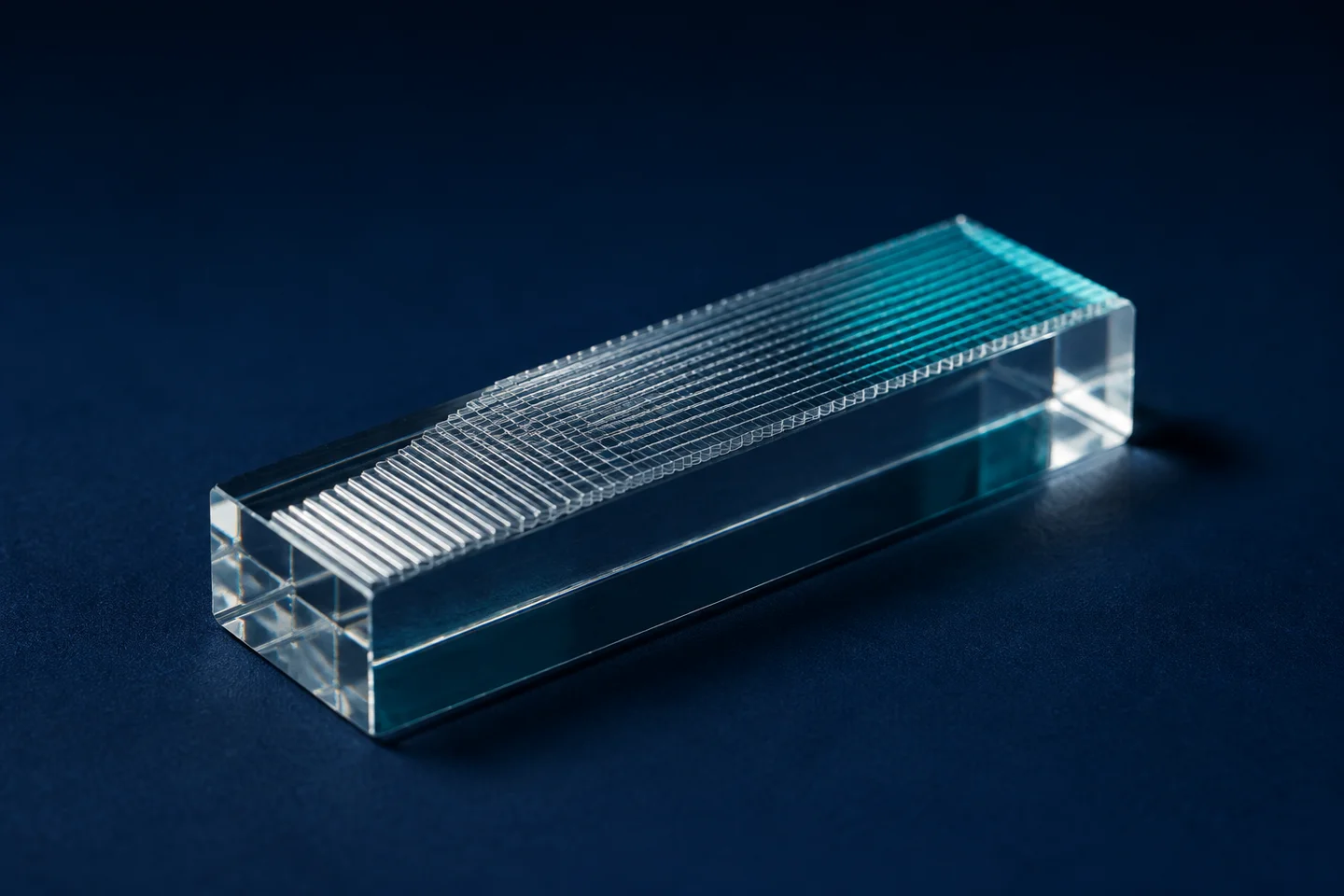
Illustrative diagram or concept image · Not a manufactured component or measurement result.
Project objective
We would develop a manufacturing and testing plan for a stepped microstructure on a lithium niobate crystal. The aim would be to investigate how the geometry and quality of the machined surface relate to performance in a defined THz experiment.
This is a proposed research direction. It does not claim a completed in-house experiment or an achieved THz performance result.
Scientific starting point
The Pécs researchers’ Optics Letters paper investigates a microstructured lithium niobate source and highlights the importance of surface quality. The literature supports developing manufacturing and experimental variants that can be compared.
Proposed development route
We would first agree the hypothesis and structure definition with the research group. Crystal orientation, usable area, edge condition and handling limits would together define the first sample.
Sample machining would be followed by geometric and surface evaluation. Only a sample linked to its measurement results would enter the THz experiment. Shared identifiers would connect manufacturing and experimental conditions.
Milestones and deliverables
01 · A research question, structure definition and plan for comparing variants.
02 · A machined sample surface with measured local profile and surface characteristics.
03 · Functional THz testing of the selected sample through research collaboration.
04 · Joint evaluation: which relationship does the evidence support, and which parameter should be changed?
How success would be evaluated
The first level of success is producing comparable, documented samples. The second is evaluating the research question defined in advance. Identifying the cause of an observed change requires manufacturing and experimental factors to be considered together; a favourable performance result is not a prerequisite for an informative trial.
Who this could support
Groups developing THz sources and nonlinear optical methods, developers of crystal-based components, and teams working on precision experimental systems.
CONNECTED ENGINEERING
From surface to wave.
- 01Crystal
- 02Microstructure
- 03THz experiment
Conceptual illustration of our engineering approach.
THE NEXT STEP
Let’s talk about your next component.
Tell us about its function, material and critical engineering question. Together, we can define a feasibility review or a focused first trial.