
Optical tooling
Aspheric optical tool insert
A development concept for an optical replication insert, from surface definition to evaluation of the first sample.
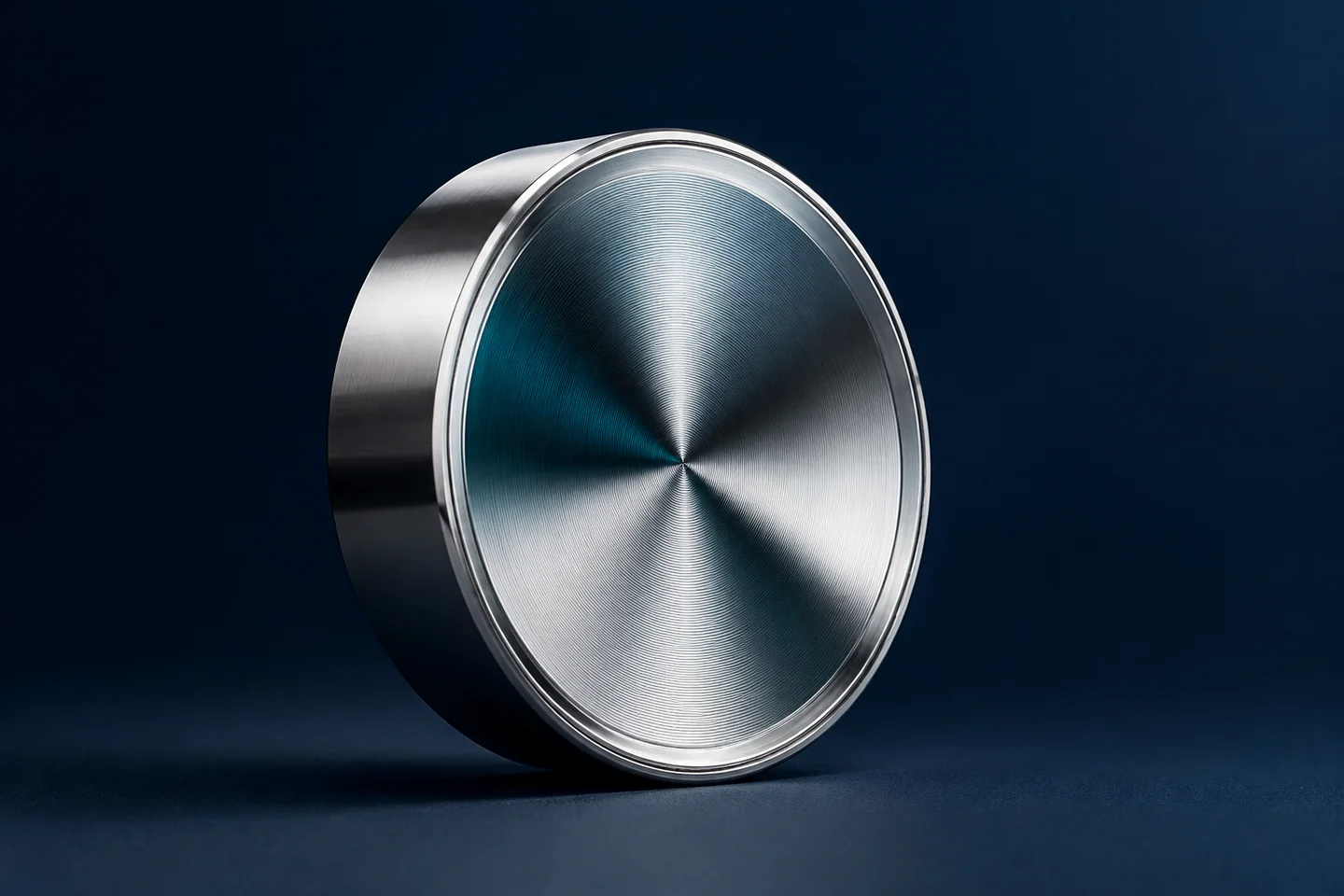
Illustrative diagram or concept image · Not a manufactured component or measurement result.
Project objective
We would investigate an aspheric tool insert for compact illumination or sensing optics, from which a polymer optical element could be replicated in the next stage. The central question is how to coordinate the optical surface, mechanical insert geometry and subsequent forming process.
The engineering challenge
A nominal asphere alone is not manufacturing documentation. The active aperture, edge zone, datum surfaces and characteristics affecting the replicated component’s function must be defined.
Deviations introduced during forming cannot necessarily be attributed to the tool surface. Inspection of the insert and evaluation of the first replicated component would therefore be separate milestones.
Proposed development route
First, we would reconcile the optical surface definition with the mechanical model and replication process. Substrate and any nickel-based coating would be evaluated against wear, thermal and machining requirements.
A suitable diamond-machining toolpath and fixture would be prepared for the IL600. A new material combination would first be assessed on a sample surface. Geometric inspection could then be followed by a replication trial at the partner’s facility.
Milestones and deliverables
01 · Approved surface and datum definitions, with a list of open questions.
02 · A material–process decision and a sample surface where the risk warrants a trial.
03 · A first insert with the agreed form, surface and geometric evaluation.
04 · Joint review of replication feedback and, if needed, a correction plan.
How success would be evaluated
Insert conformity would be assessed over the agreed aperture, within the specified datum system and using the agreed measurement method. The replicated component’s functional result would inform the next stage. Numerical tolerances can be committed to once the target product specification is understood.
Who this could support
Optical component developers, injection-mould tooling designers and teams developing illumination and sensing products. The starting inputs are a surface definition, product function and an outline of the replication process.
CONNECTED ENGINEERING
Different challenges. Different geometries. Shared precision.
- 01Function
- 02Geometry
- 03Application
Conceptual illustration of our engineering approach.
THE NEXT STEP
Let’s talk about your next component.
Tell us about its function, material and critical engineering question. Together, we can define a feasibility review or a focused first trial.