
Application insight · 2026-09-07
From optical design to a replicable surface
Why product function, tool insert and forming process need to be considered together.
Editorial insight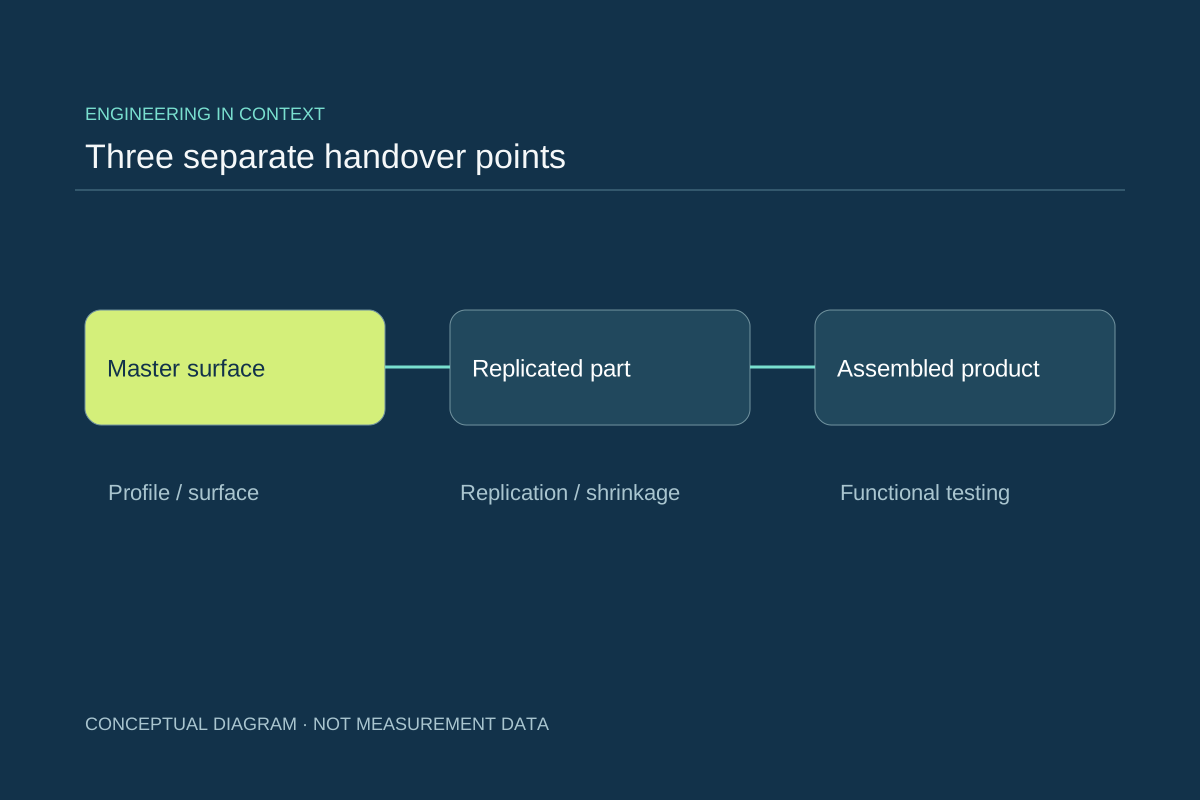
Illustrative diagram or concept image · Not a manufactured component or measurement result.
The insert is part of a process
The insert transfers the designed surface to the replicated component. Development must therefore consider the forming process alongside the geometry. A well-machined surface alone does not establish how the finished optical element will behave.
Selecting the manufacturing route
A directly manufactured prototype and a replication insert serve different purposes. A prototype can help evaluate product function; the insert provides a basis for producing further parts.
Process selection considers material, surface, intended quantity and inspection together. The first development step follows the question that needs to be answered earliest.
Three questions before the first prototype
What must the finished optical element do? Product function helps define the active surface and critical parameters.
What is the tool’s role in replication? Insert geometry and material requirements should be defined alongside forming conditions.
When do we measure, and what? The tool, the first replicated component and the assembled product require different investigations.
Where feedback belongs
If the first replicated part differs from the intended shape, process evaluation should establish whether tool correction is justified. Comparison requires the starting geometry and measurement conditions to be recorded.
Related articles
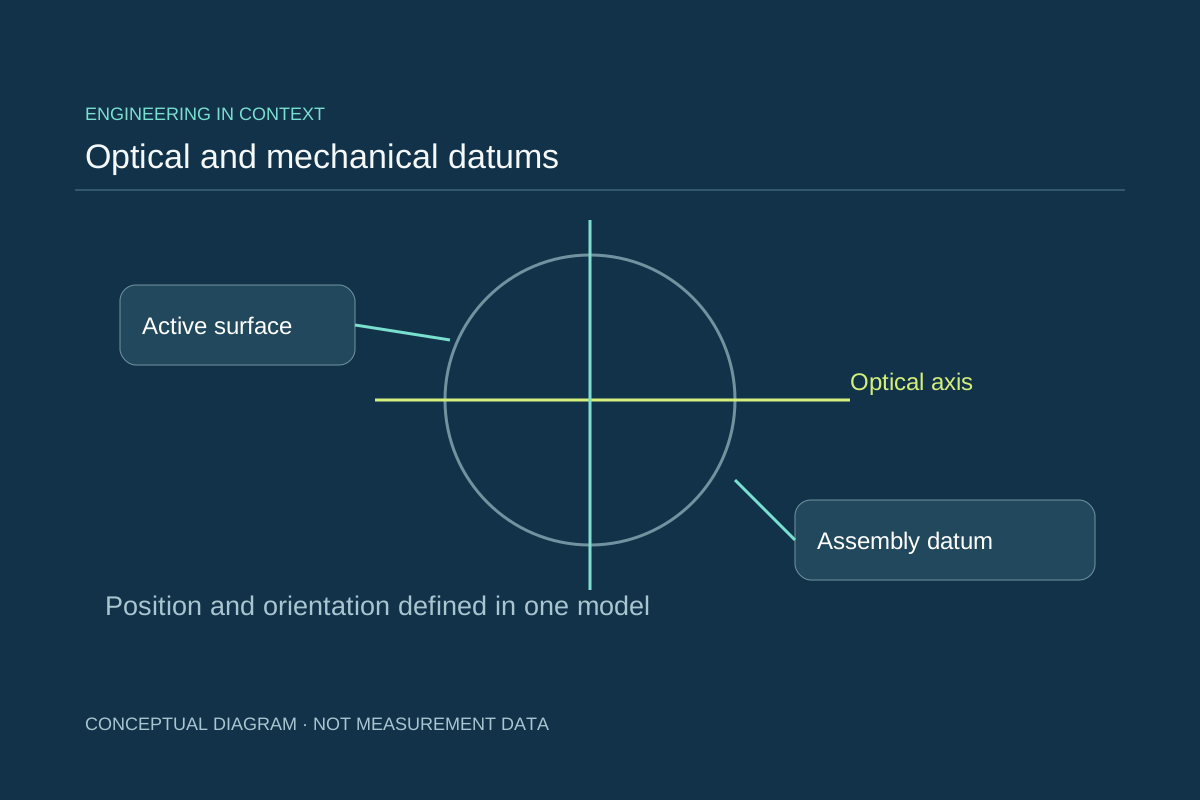 Application insight
2026-09-07
Design the mirror and its mounting together
In metal optics, the optical surface and mechanical datum system are inseparable design considerations.
Read article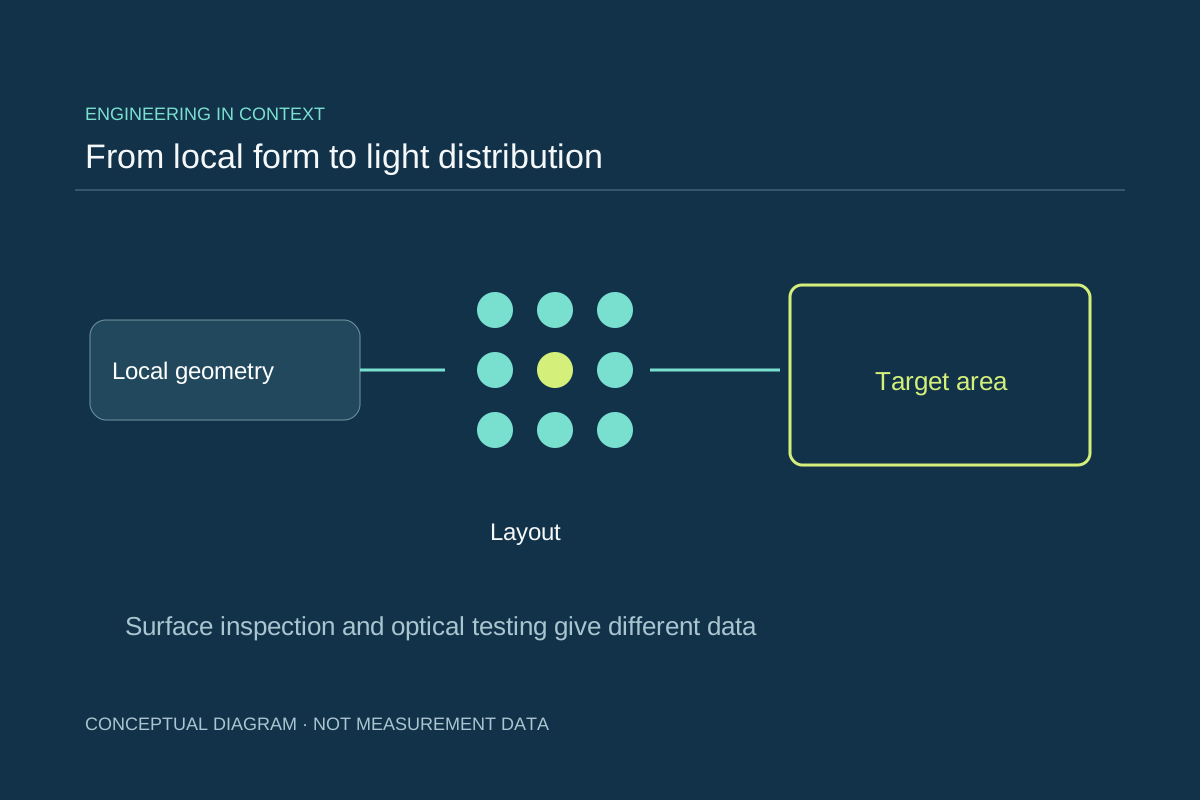 Application insight
2026-09-07
Micro-optics for illumination and sensing
The roles of lens arrays, beam shaping and replication within a compact optical system.
Read article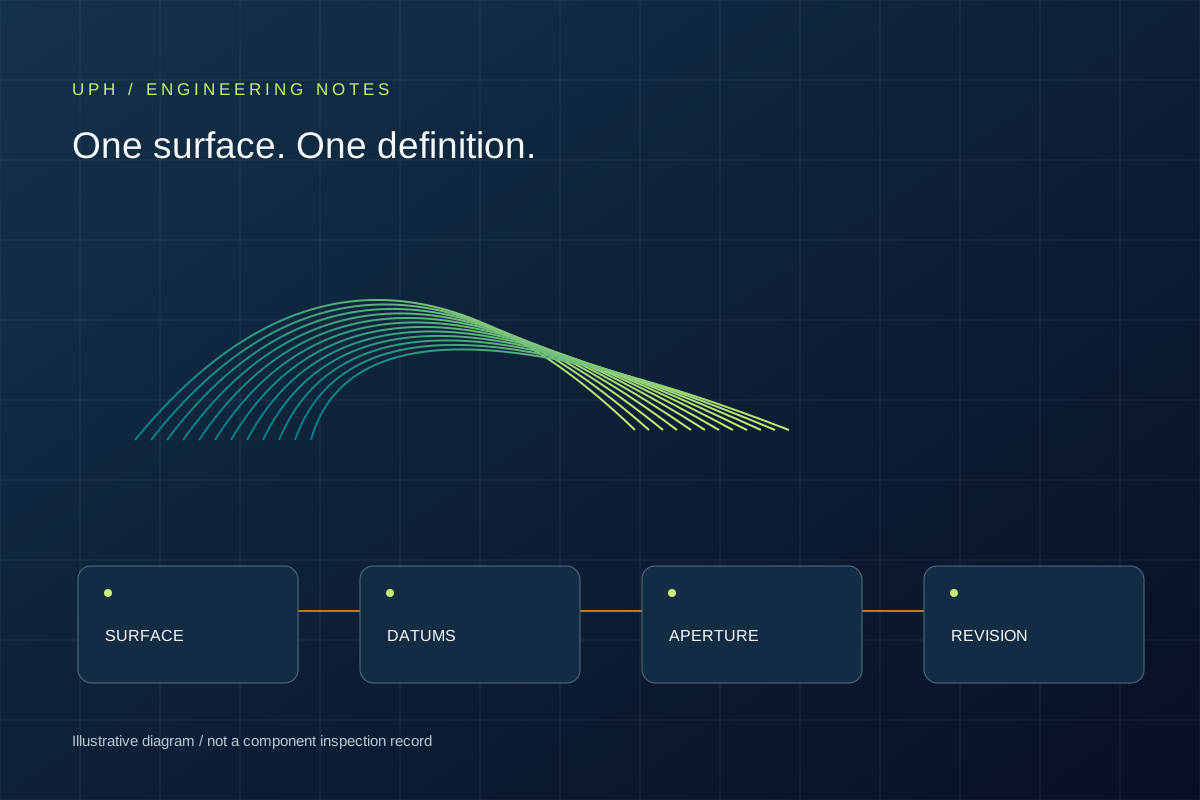 Engineering guide
2026-10-07
Freeform optics: what should accompany the CAD model?
Surface equations, coordinates, aperture and revision: checkpoints for the digital handover before machining.
Read articleCONNECTED ENGINEERING
Different challenges. Different geometries. Shared precision.
- 01Function
- 02Geometry
- 03Application
Conceptual illustration of our engineering approach.
THE NEXT STEP
Let’s talk about your next component.
Tell us about its function, material and critical engineering question. Together, we can define a feasibility review or a focused first trial.