
Structured optical insert · 2026-10-06
Fresnel optical insert
Concentric optical zones for developing a thin, replicable beam-shaping element.
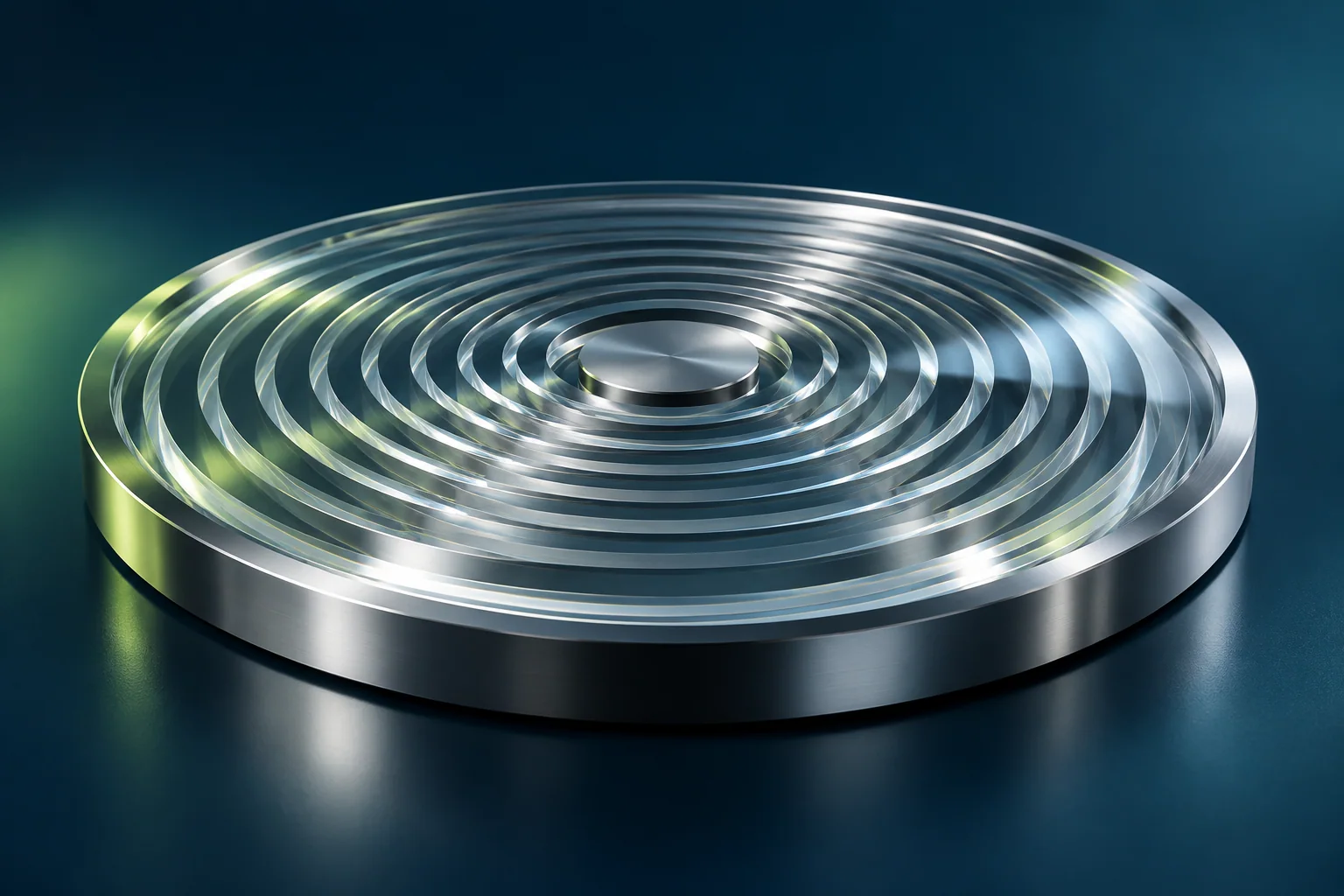
AI-generated engineering concept · Not to scale; not a manufactured component or measurement result.
FROM CONCEPT TO YOUR COMPONENT
Start with the function, material and the question your first trial should answer.
Why work with us? Start Fresnel manufacturability at the critical edges.
More than the nominal profile
We examine access to steep zones through IL600 axis positioning and tool selection. The decision starts with actual angular and clearance requirements, not only the nominal optical profile.
An early trial of the difficult zone
A selected annular sample can reveal zone-profile and edge behavior. This provides evidence for changing geometry or process before committing the work required for a complete insert.
Compare against the appropriate alternative
A custom insert can add value for a specific zone pattern or mechanical interface. Separate optical tests establish stray light and replica performance; these are not inferred automatically from machined roughness.
Function · optical power with less bulk
This concept describes a replication insert for a zoned optical surface. Fresnel steps make zone boundaries and edges important manufacturing requirements alongside the optical profile. The surface does not replace design of the complete illumination or imaging system.
Preparation · define each zone
Specify zone profiles, depth, boundary radii, permitted transitions and active aperture. Distinguish optically active features from surfaces required for moulding. Coating and insert mechanics must suit the replication process.
Machining question · edges and access
The steepest zone or narrowest transition often controls feasibility. B-axis orientation and tool geometry establish access. A partial ring-shaped test area can examine the profile and edge formation before the complete insert.
Handover · zone profiles and optical testing
Geometric evaluation addresses zone form, step height and edge condition. Stray light and the required distribution need an optical test with separate acceptance criteria.
a Fresnel test surface or insert, agreed zone evaluation and a replication trial plan.
The application behind the component.
Review the operating requirements and related engineering tasks in these application areas.
CONNECTED ENGINEERING
Different challenges. Different geometries. Shared precision.
- 01Function
- 02Geometry
- 03Application
Conceptual illustration of our engineering approach.
THE NEXT STEP
Let’s talk about your next component.
Tell us about its function, material and critical engineering question. Together, we can define a feasibility review or a focused first trial.