
Application insight · 2026-09-07
Design the mirror and its mounting together
In metal optics, the optical surface and mechanical datum system are inseparable design considerations.
Editorial insight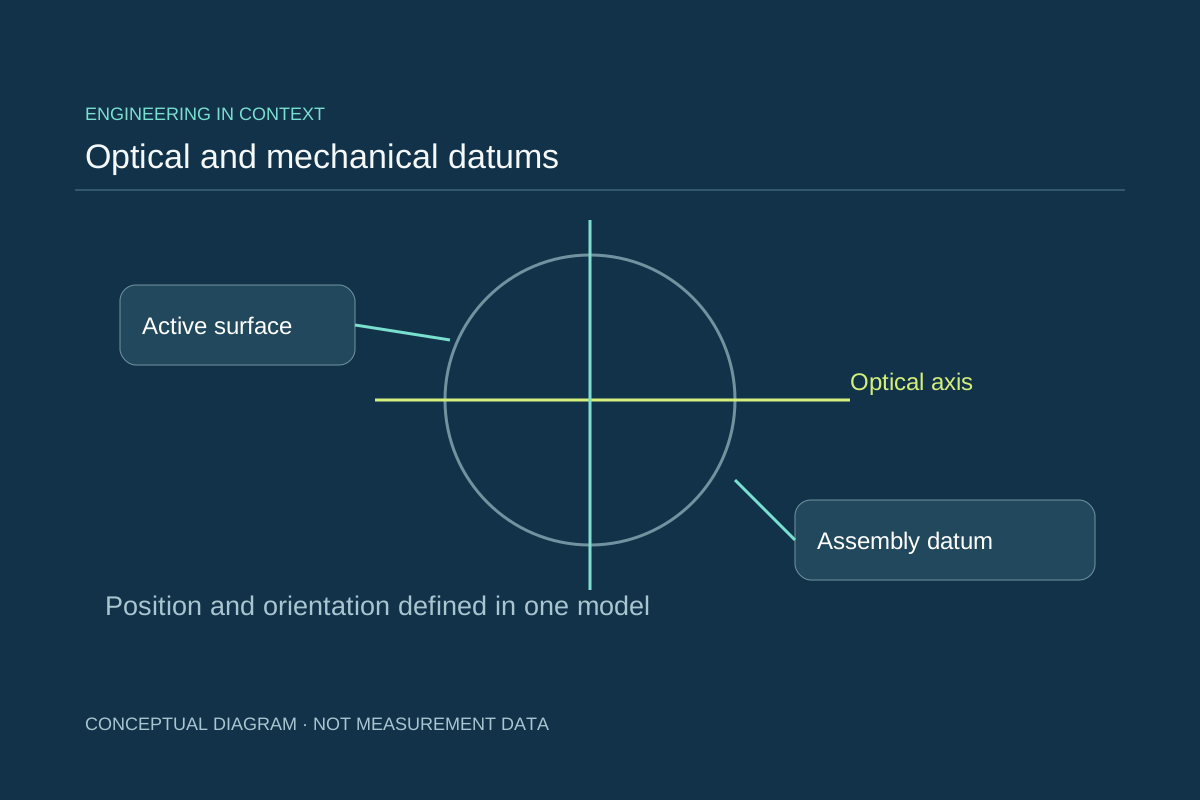
Illustrative diagram or concept image · Not a manufactured component or measurement result.
A surface has a position and direction too
The mirror’s optical design depends on both surface shape and spatial position. Its mechanical interface must establish that position. Manufacturing and assembly datums therefore matter from the modelling stage.
One component, connected requirements
The optical geometry of a mirror is meaningful in relation to its position and orientation within the system. Mounting, material and machining datums should therefore be addressed together during model review.
Details follow the operating environment: how is the part used, how is it installed, and which characteristics need measurement before assembly? The surface and mechanics then form one traceable specification.
The order of requirements
First, we define function and wavelength range. Next come aperture, datum system and installation geometry. Material and coating are selected for the operating environment.
The inspection plan should follow this structure: alongside surface evaluation, it should identify the system test that will establish the installed component’s performance.
A worked development concept
Off-axis parabolic mirror — development concept
The concept follows the proposed task from agreement on coordinates to the separation of geometric inspection and functional testing.
Related articles
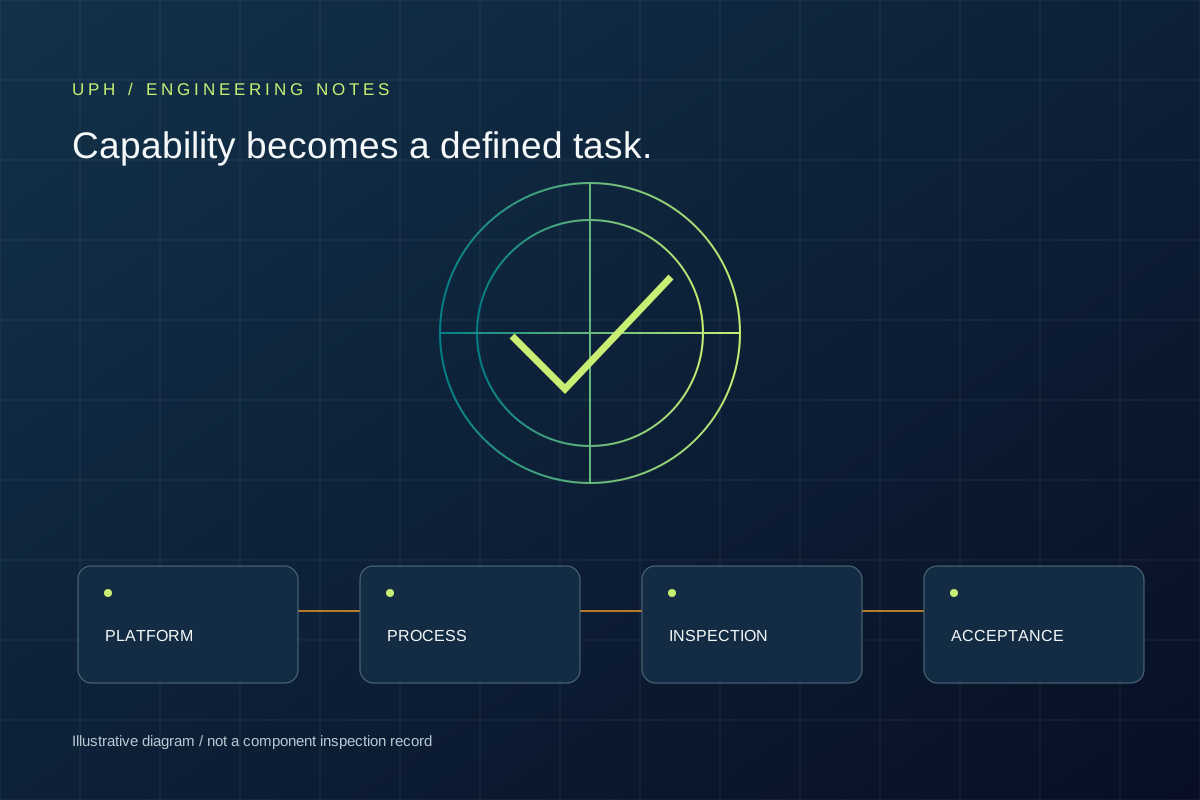 Engineering guide
2026-10-07
From the IL600 datasheet to component acceptance
What does a machine specification mean, and how does it become a clear, verifiable component requirement?
Read article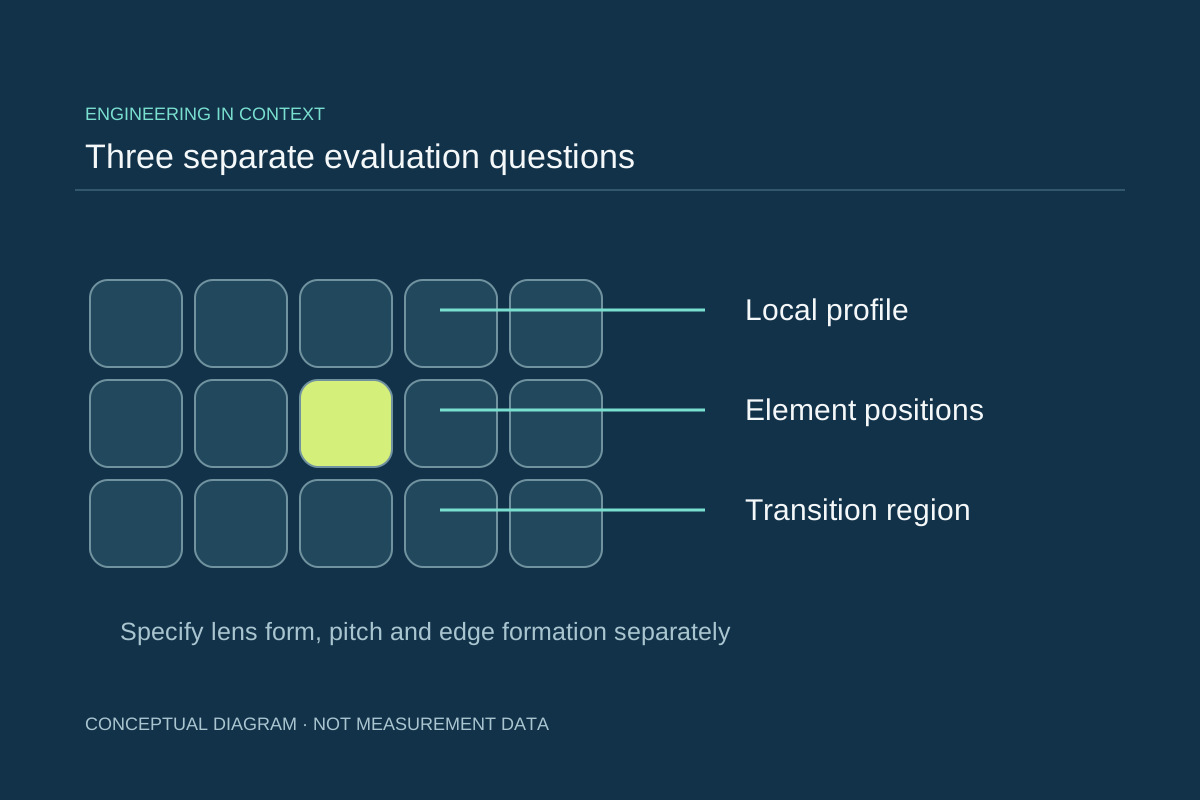 Micro-optical guide
2026-10-06
Microlens arrays: edges belong in the optical design too
Lens profile, layout and transition regions: three inspection tasks on one master surface.
Read article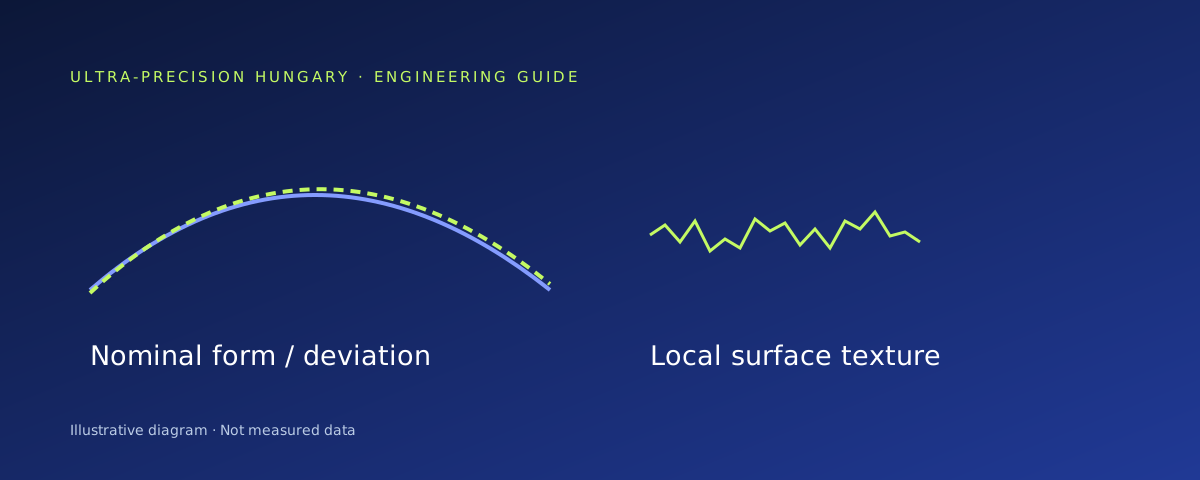 Engineering guide
2026-09-17
Surface roughness and form deviation: two different questions
A smooth surface does not necessarily follow the intended shape. Surface and geometric requirements must therefore be specified separately.
Read articleCONNECTED ENGINEERING
Different challenges. Different geometries. Shared precision.
- 01Function
- 02Geometry
- 03Application
Conceptual illustration of our engineering approach.
THE NEXT STEP
Let’s talk about your next component.
Tell us about its function, material and critical engineering question. Together, we can define a feasibility review or a focused first trial.