← Applications

Optics and photonics

Optics and photonics

Aspheric, freeform and reflective components developed around the operating wavelength.

Editorial insight
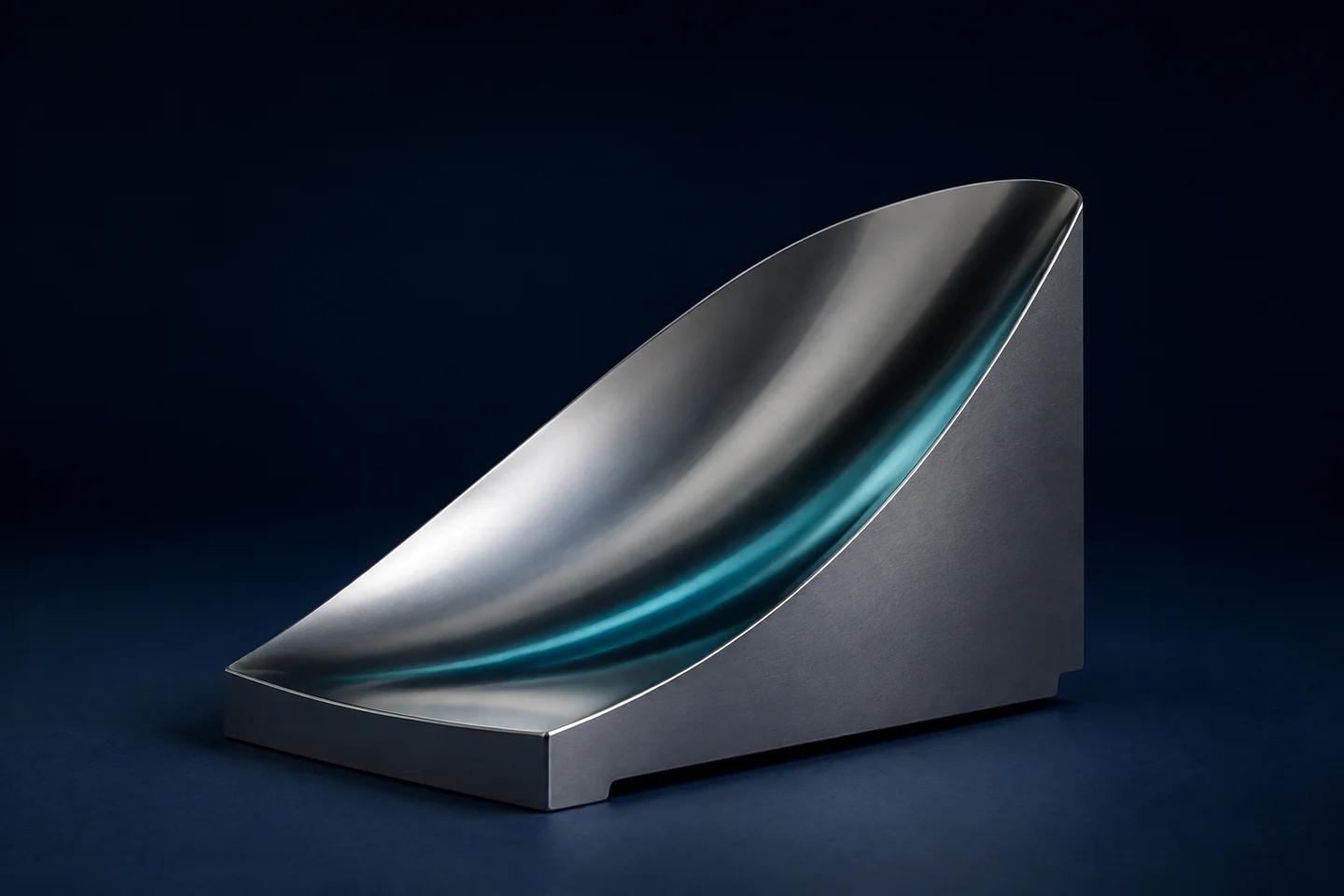
Optics and photonics — illustrative visual, not measurement data

Illustrative diagram or concept image · Not a manufactured component or measurement result.

The application · shaping the path of light

In laser technology, infrared instruments and laboratory optical systems, surface geometry and material together determine the component’s role. The initial task may be focusing, collimation, beam steering or creating a more complex light distribution.

Potential components

Axisymmetric and off-axis mirrors, aspheric reflectors, custom freeforms and mechanical parts carrying optical surfaces. Freeforms are particularly relevant when the system layout or intended function cannot be described by a simple rotationally symmetric surface.

Material, coating and mounting are selected for wavelength, environmental loading and integration needs.

Optics and mechanics in one component

The relationship between the mirror surface and mounting datums also determines alignment. Our manufacturing plan therefore treats optical and mechanical geometry together.

We work backwards from the installed position: which datum establishes surface orientation, how can machining and measurement access be achieved, and where is the part sensitive to clamping? The solution follows the component’s role in the complete system.

Manufacturing and inspection

The surface definition is converted into a machinable toolpath. Access and remeasurement are considered at this stage. Alongside geometric evaluation, we identify any application-specific optical test: for example, the system owner may separately verify behaviour at the operating wavelength.

For the first discussion

Wavelength range, optical surface definition, useful aperture, mounting datum, material and coating plan, allowable form deviation and environmental loading. Connection to the existing system matters as much as the surface itself.

Further reading and a development concept

START WITH THE APPLICATION

Which surface makes the difference?

Define the function, choose the process and agree the evidence before manufacturing.

01

LASERS · INFRARED · LAB OPTICS

The mirror and its mounting belong together.

An off-axis mirror or aspheric reflector performs its role only when correctly positioned. The manufacturing plan connects optical surfaces to mechanical datums. Material and coating requirements are defined for the wavelength and operating environment.

Value: assembly-critical datums are addressed early.
Define together

Clear aperture, wavelength, mounting, coating, thermal loading and optical testing in the system.

Your next stepDiscuss a mirror or optical component

CONNECTED ENGINEERING

Different challenges. Different geometries. Shared precision.

  1. 01Function
  2. 02Geometry
  3. 03Application

Conceptual illustration of our engineering approach.

THE NEXT STEP

Let’s talk about your next component.

Tell us about its function, material and critical engineering question. Together, we can define a feasibility review or a focused first trial.

Discuss your project